
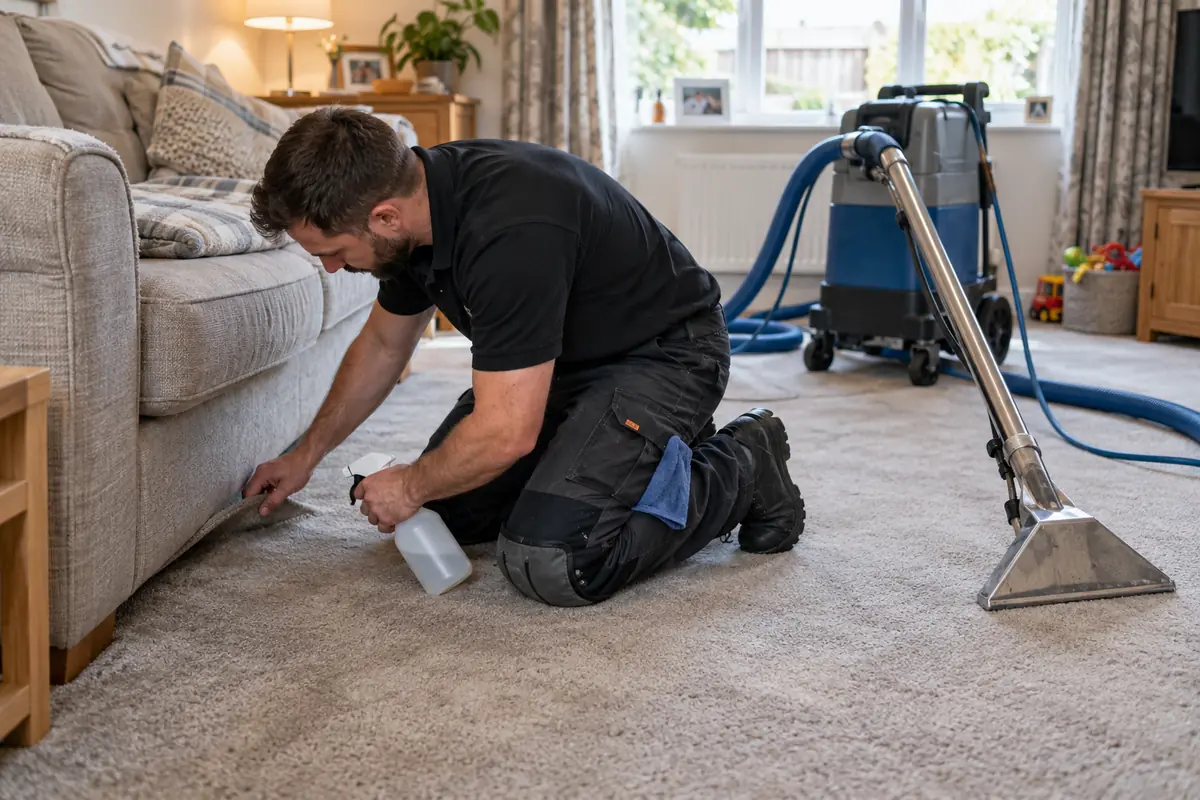
Your carpet looks tired, and a hire machine looks like a cheap fix. Get it wrong and you end up with a damp, patchy carpet and stains that return. The choice in DIY carpet cleaning vs professional cleaning matters more than it seems.
This guide compares both routes honestly. You will see when DIY works, where it goes wrong, and how to choose.
DIY Carpet Cleaning vs Professional Cleaning: The Short Answer
Professional cleaning gives a deeper, lower-risk clean, but DIY works well for light dirt and regular upkeep. The right choice depends on how dirty the carpet is, which fibre it has, and how much time you have.
Michael Bogoyavlenskiy, CEO of Cleaning Express, told Woman & Home in April 2026 that DIY will not match a professional result. He still calls DIY the more sensible choice for most people.
| DIY by hand | Own or hired machine | Professional clean | |
|---|---|---|---|
| Best for | Fresh spills and light dirt | An occasional refresh of lightly soiled carpet | Ground-in dirt, old stains and delicate fibres |
| Water left behind | Little, if you avoid soaking | Varies by machine | Often less, because the equipment is stronger |
| Effort | Low to medium | High: heavy kit and slow passes | None |
| Main risk | Rubbing or soaking a stain | Over-wetting and leftover detergent | A method that does not suit your fibre |
What Counts as DIY Carpet Cleaning?
DIY carpet cleaning means anything you do yourself, from blotting a spill to running a hired carpet washer.
Hand Cleaning and Spot Treatment
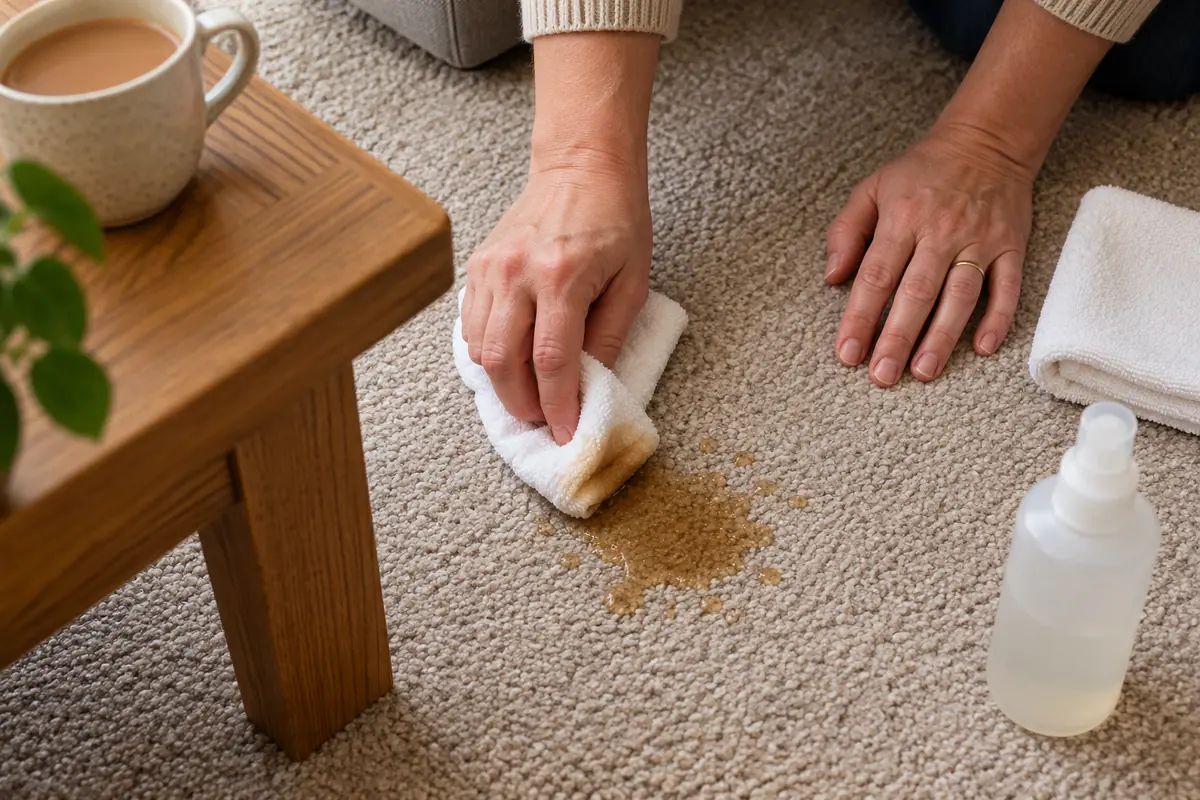
Hand cleaning suits fresh spills and small marks. Vacuum first, then treat the stain with a carpet stain remover. Dab from the outside in, and test the product on a hidden patch first.
Avoid lots of water and hot water, which can make some stains worse, Which? (March 2026) advises. Rubbing is just as risky. Brintons' Jodie Hatton told Woman & Home that it can burst the pile and leave the carpet fluffy and discoloured.
For odours, sprinkle baking soda on the dry carpet and leave it for at least 15 minutes. Then vacuum it up thoroughly, as Which? suggests.
Hiring or Buying a Carpet Washer
A carpet washer sprays water and detergent into the fibres, scrubs them, then sucks the dirty water back up. Carpet cleaner hire puts one in your hands for a day or two.
The Which? carpet cleaner tests say dedicated washers usually clean better than multipurpose machines. They also warn that the machines are bulky and heavy. The models Which? lists weigh between 6.4kg and 17.8kg.
Which? says buying suits homes that need regular cleans. Renting suits lightly used homes that need an occasional deep clean.
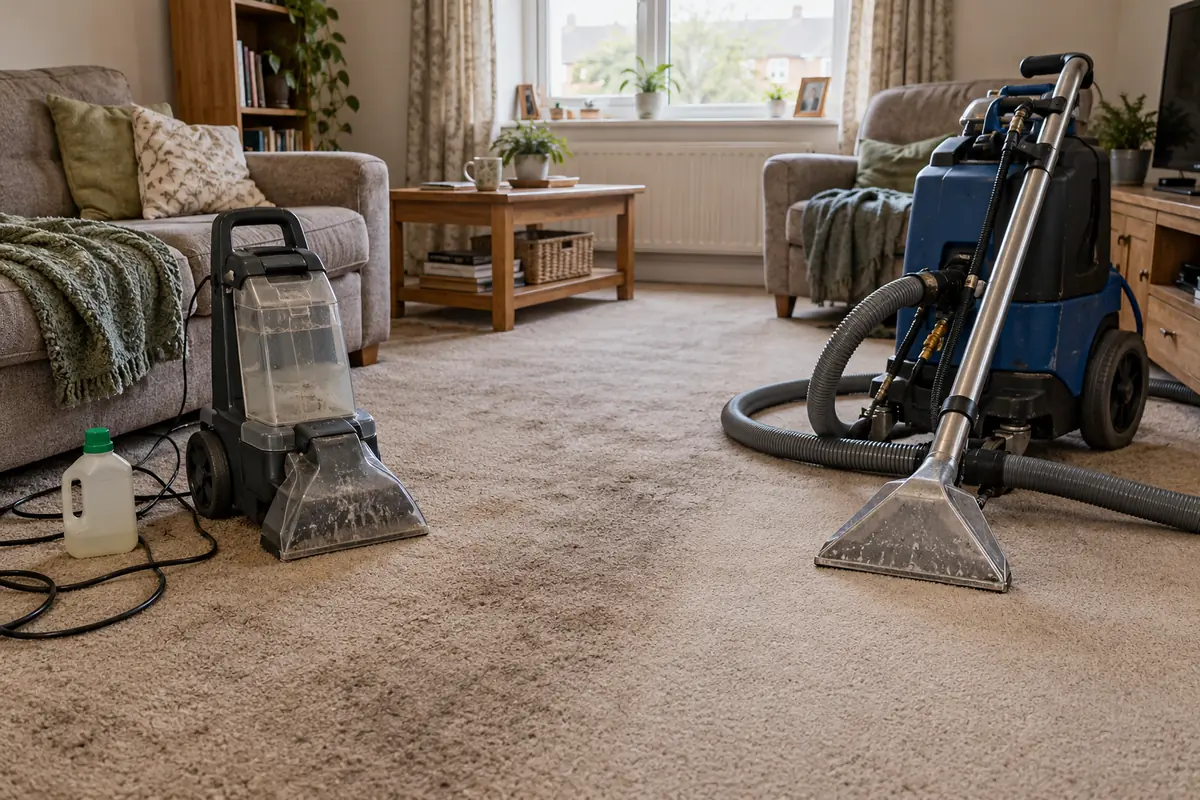
Check that rugs and sofas are colourfast before you use a machine's upholstery tool. Tech Advisor (2022) also says to avoid carpet cleaners on silk, jute and leather. Delicate pieces may need specialist rug cleaning or upholstery cleaning.
How Does a Professional Carpet Clean Work?
A professional clean follows a set order: inspect, remove dry soil, pre-treat, agitate, extract and dry.
One UK cleaning firm's 2026 guide sets out this sequence:
- Inspect the carpet and spot-test a hidden patch.
- Dry vacuum to lift out grit before any water goes in.
- Pre-spray a product that suits the fibre.
- Agitate it through the pile to release bonded soil.
- Extract the dirty water with hot water extraction.
- Dry the carpet and groom the pile.
The dry vacuum matters because water pushed onto dry grit turns it to mud and drives it deeper, the guide says. Benjamin Hirst of Smart Cleaning also advised Woman & Home to vacuum slowly in several directions before any wet clean.
Hot water extraction sprays hot water and detergent into the carpet, then pulls it back out with the dirt. Fantastic Services' 2023 blog notes that firms often call it steam cleaning, even though the two differ.
Ask any cleaner which method they use. Dry cleaning, for example, uses powder or compound with little or no water. The Fantastic Services blog says it suits more delicate carpets, and Hirst says dry powder also works at home. If you want a method matched to your carpet, ask a professional carpet cleaning service which approach fits.
When Is DIY Carpet Cleaning Good Enough?
DIY works well for fresh spills, light dirt and regular upkeep on a carpet in good condition. Woman & Home's April 2026 verdict is that a fairly new, well-maintained carpet may not need a professional.
DIY is a good fit when:
- The carpet is fairly new and well kept.
- The dirt is light and mostly on the surface.
- The room is small and sees little traffic.
- You want to treat fresh spills straight away.
Good technique closes much of the gap. Work in straight, slightly overlapping lines, move slowly, and keep going until the water runs clear, according to Which? and Cleaning Express.
Cleaning Express's CEO adds that a domestic machine with counter-rotating brushes and a decent detergent does a good job. He also notes that some professionals rush, so careful DIY can beat a hurried clean.
Where Does DIY Carpet Cleaning Go Wrong?
DIY goes wrong when the carpet gets too wet, the wrong product goes in, or the machine cannot handle the pile.
Too Much Water and Slow Drying
Wetter is not better. Tech Advisor (2022) warns that a soaked underlay encourages mould, and that furniture returned too soon leaves damp spots.
Plan for a long dry. Tech Advisor puts the usual time at five or six hours and up to 24 hours, so leave the room empty overnight if you can. Open windows and run fans or a dehumidifier.
Which? measures this directly. It weighs test carpets after one, five and 24 hours to see how much water each machine leaves behind. Some models leave carpets soggy.
Why Stains Come Back (Carpet Wicking)
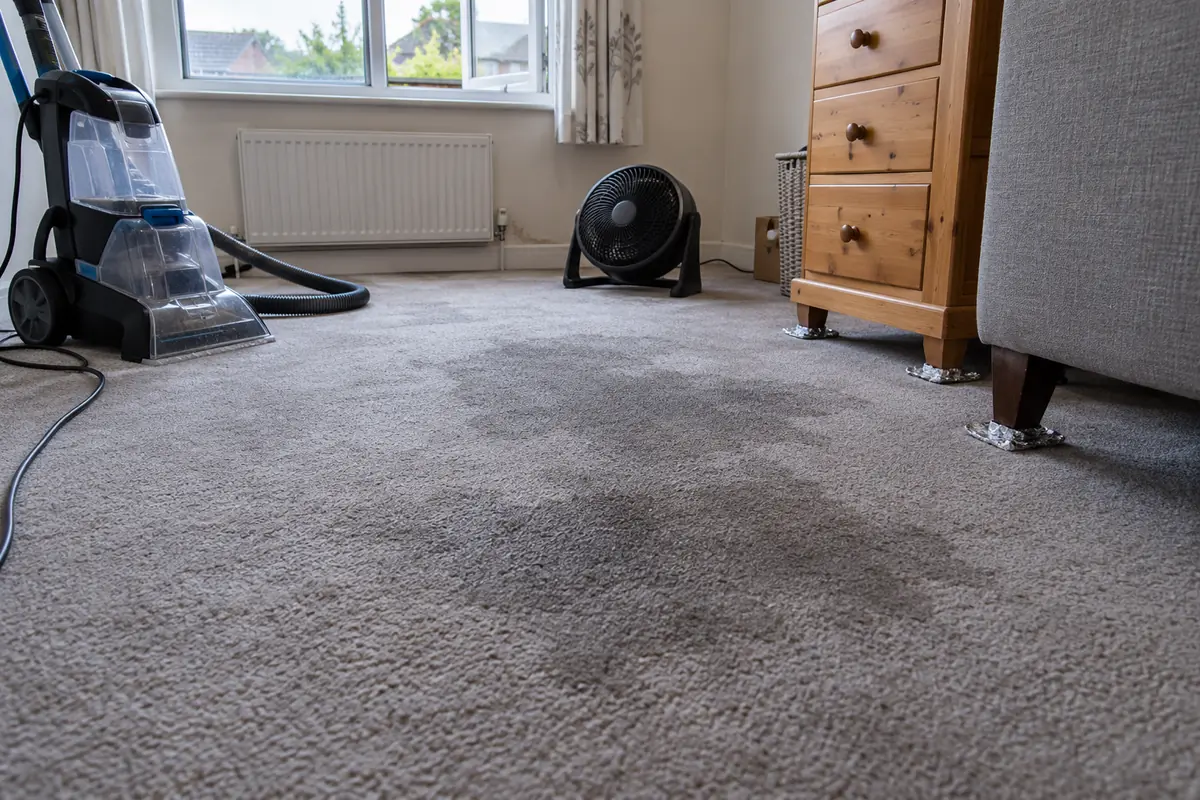
Stains can return because moisture carries deep dirt back to the surface as the carpet dries. A 2023 carpet-cleaning industry blog calls this wicking. It links wicking to too much water or detergent, slow drying and shallow cleaning.
Wicking only happens while the carpet is wet, so faster drying gives it less chance. A 2010 how-to guide names two causes of brown patches: too much solution and water, or deep dirt rising as the carpet dries.
If brown patches appear, the same guide suggests extracting the excess moisture with a wet vacuum and drying the spot with a fan. Use as little water as you can on the repeat clean.
Wrong Products and Leftover Residue
Household cleaners can leave residue and damage fibres, even when they seem to work at first.
Carpet brand Cormar advises against dish soap, bar soap and general-purpose cleaners in its wool care guide. It says they can cause faster re-soiling, colour bleeding, bleaching and damage to the pile or backing. Tech Advisor also warns against improvising with washing-up liquid, because you will struggle to rinse it out.
For wool and wool-rich carpets, Cormar recommends a WoolSafe Approved service provider. If you clean the carpet yourself, it recommends independently tested products. WoolSafe is a UK organisation that advises on wool carpet care and approves cleaning products and service providers.
Hire firms add their own rules. Rug Doctor's hire page says to use only its detergents. It warns that other products, such as laundry detergent, can damage the machine and possibly your carpet. It also says it does not cover problems with machines from unauthorised dealers, so hire from an official outlet.
Thick Carpets and Machine Limits
Hire machines can struggle on thick carpets, so test a small area first. A December 2021 Mumsnet thread describes one thick, good-quality carpet that stayed waterlogged after cleaning with a hired machine. That is a single report, not a rule.
A test patch in a quiet corner shows how much water your carpet holds and how well the machine pulls it out. If the patch stays soaked, stop and ask a professional.
Steam Cleaners and Spot Cleaners
Which? found steam cleaners and spot cleaners disappointing. Its tests rated steam cleaners poor at cleaning carpets, and long use risks shrinking or damaging fibres.
Which? could not recommend any spot cleaner it tested. All struggled, especially with coffee stains. Most full-size machines also did badly on dried-on stains in its tests. Which? says a carpet stain remover spray is usually the better option.
Is Professional Carpet Cleaning Worth It?
Professional carpet cleaning is worth it when the carpet is heavily soiled, delicate, stained or untouched for years. Cleaning Express's CEO names moving home and long gaps between cleans as the clearest cases.
Brintons' Jodie Hatton says some stains are too stubborn or large to tackle alone. Professionals use more powerful equipment, she told Woman & Home, so they lift deep dirt that home tools may miss.
Moving home is one of those moments. An end-of-tenancy deep clean is one option if you are leaving a rental.
Pet accidents are another. One UK firm's 2026 guide says accidents that soak into the underlay defeat hire machines. Specialist pet stain removal and odour removal exist for these cases.
Dried-on marks are harder than fresh ones. Which? found most machines weak on them, so a specialist stain removal treatment may suit better. Wool, silk and jute carpets need a cleaner who knows the fibre.
Professional cleaning costs more upfront than DIY. In return, you save a day of work and avoid hauling a heavy machine.
Which Should You Choose? A Decision Table
DIY carpet cleaning vs professional cleaning comes down to the carpet's condition: choose DIY for light, fresh dirt, a machine for an occasional refresh, and a professional for anything deep, delicate or old.
| Your situation | Best option | Why |
|---|---|---|
| Fresh spill | DIY: blot and spot-treat | Quick action stops many stains setting. |
| Light dirt on a well-kept carpet | DIY by hand or machine | Experts say it may not need a professional. |
| Small, low-traffic room | Hired or own machine | It suits an occasional refresh. |
| Years since the last clean, or moving home | Professional | Cleaning Express's CEO names both cases. |
| Ground-in stains, wax or set-in traffic lanes | Professional | Stronger equipment lifts deeper dirt. |
| Wool, silk, jute or another delicate fibre | A professional who knows the fibre | Heat or the wrong product can damage it. |
| Pet accidents soaked into the underlay | Professional or specialist treatment | One 2026 firm guide says hire machines struggle here. |
| Thick, dense pile | Test a patch first, or ask a professional | One 2021 thread reports waterlogging. |
Checklist: Before You Hire a Machine or Book a Professional
A short checklist prevents most DIY and booking mistakes.
Before You Hire or Use a Machine
- Check your carpet fibre and any guarantee terms first.
- Vacuum slowly in several directions before any water goes down.
- Test the product and machine on a hidden patch.
- Hire from an official outlet, and read the detergent rules before swapping products.
- Use less water than you think you need, and rinse once with clean water.
- Plan the drying time: open windows, run fans and keep pets out.
Questions to Ask a Professional
- Which method will you use: hot water extraction, dry cleaning or another?
- Do you dry vacuum and spot-test before cleaning?
- Which products will you use on my fibre, and are they WoolSafe Approved for wool?
- How long will the carpet take to dry?
- What happens if a stain returns or the result disappoints?
- Are you insured?
Frequently Asked Questions
Is professional carpet cleaning better than DIY?
Professional cleaning gives a deeper clean, but it is not always necessary. It suits ground-in dirt, old stains, delicate fibres and long gaps between cleans. DIY suits light dirt and fresh spills. The decision table above matches common situations to each option.
Can a hire machine damage my carpet?
Yes, mainly through over-wetting, leftover detergent or the wrong product for your fibre. Tech Advisor (2022) links soaked underlay to mould, and Cormar warns that household cleaners can bleach and damage fibres. Test a hidden patch, rinse well and dry the room properly.
How long does a carpet take to dry after cleaning?
A carpet usually takes five or six hours to dry, and up to 24 hours, according to Tech Advisor (2022). Drying depends on the machine, the pile and the room. Which? weighs test carpets after one, five and 24 hours to compare how wet each machine leaves them. Ask a professional for a drying time before you book.
How often should you clean your carpets?
About once a year for a professional clean, or every three to six months with your own machine, according to Cleaning Express's CEO. Jodie Hatton says regular vacuuming and prompt spot cleaning can be enough. Both spoke to Woman & Home in April 2026.
Is steam cleaning the same as hot water extraction?
No, although many firms use the terms as if they mean the same thing. Fantastic Services' 2023 blog says firms often sell hot water extraction as steam cleaning. Which? treats steam cleaners as separate machines and found them poor on carpet, so ask which method a cleaner uses.
Need Help With Your Carpets?
Describe your carpet's fibre, its stains and the date of its last clean to a professional, and ask which method suits it.
Looking for local help? Browse carpet cleaning in Edinburgh or Dundee, or get in touch with a question about your carpet.