
A clean mattress is essential for a comfortable and hygienic bedroom. However, mattresses collect more than just dust. Over time, sweat, body oils, accidental spills, pet accidents and everyday use can leave unpleasant odours and visible marks.
The good news is that you do not always need professional equipment to freshen up your mattress. With the right cleaning methods and a little care, you can tackle many common stains at home.
In this guide, we explain how to clean a mattress, how to remove stains from a mattress, how to use baking soda safely, and how to keep your mattress fresh for longer. Whether you are dealing with a recent spill or trying to remove old yellow marks, these practical mattress cleaning tips will help you understand what to do.
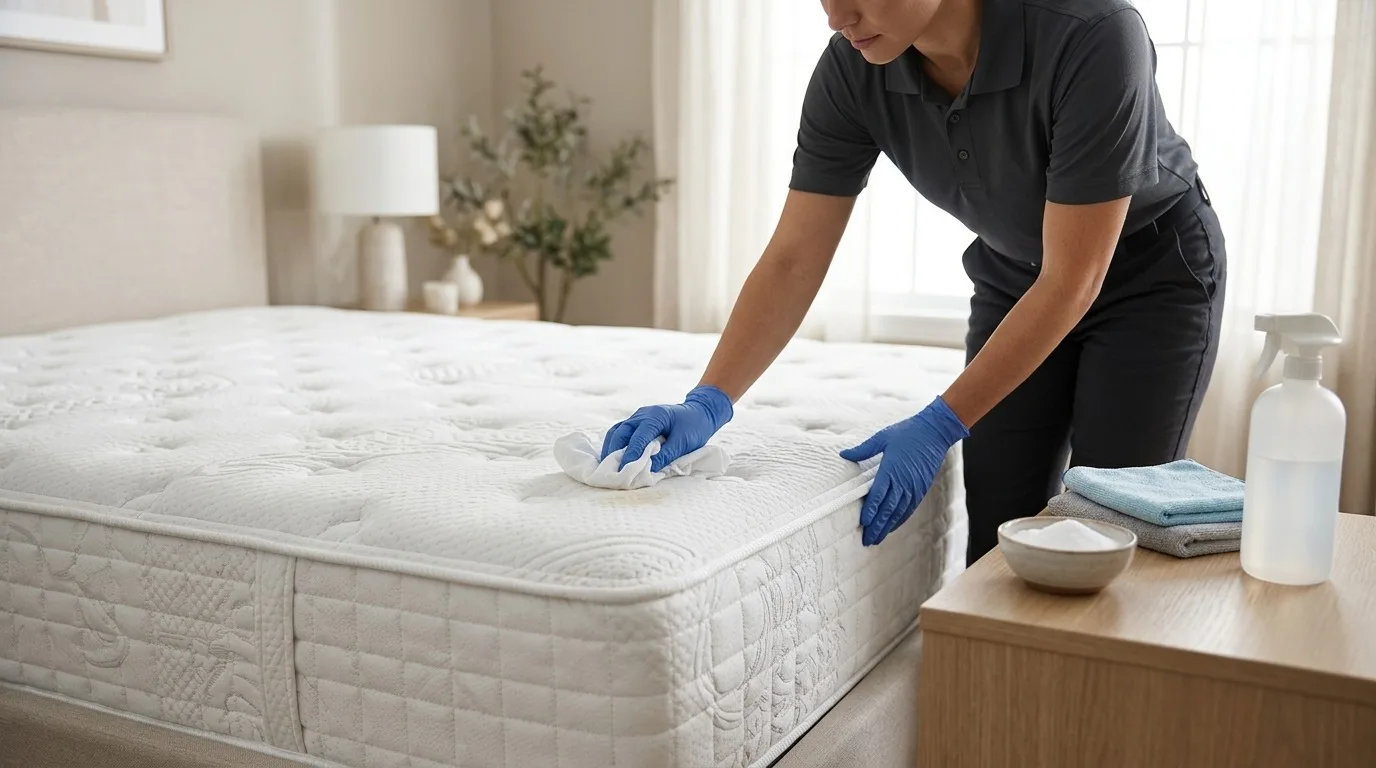
How to Clean a Mattress at Home
Before starting, check the mattress manufacturer's care instructions. Different mattress materials require different cleaning methods, and some should not be exposed to moisture or certain cleaning products.
Follow these general steps to clean your mattress at home:
- Remove all bedding: Take off sheets, pillowcases, mattress protectors and other removable bedding. Wash them according to their care labels.
- Check the mattress: Look for stains, discolouration, unpleasant smells and areas that need extra attention.
- Vacuum the surface: Use an appropriate upholstery attachment to remove loose dust, hair and debris. Follow the manufacturer's advice, particularly for delicate mattress materials.
- Treat visible stains: Choose a cleaning method suitable for the type of stain and mattress fabric. Always test it on a small, hidden area first.
- Freshen the mattress: If the manufacturer's instructions allow it, a light application of baking soda can help absorb some surface moisture and unwanted smells.
- Allow it to dry completely: Make sure the mattress is fully dry before putting the bedding back on.
Avoid soaking your mattress. Excess moisture can penetrate the inner layers, making drying difficult and potentially creating conditions for mould or mildew.
What You Need to Deep Clean a Mattress
You do not need a cupboard full of cleaning products to get started. Depending on the mattress material and the type of stain, you may need:
- A vacuum cleaner with a suitable upholstery attachment
- Clean, soft microfibre cloths
- A small bowl of cool or lukewarm water
- A mild cleaning solution approved for the mattress material
- Baking soda, if permitted by the manufacturer's instructions
- A spray bottle for controlled application, if appropriate
- Clean, dry towels
Avoid using bleach, strong household chemicals or abrasive brushes unless the manufacturer specifically recommends them. These products may damage the mattress cover or affect its colour and texture.
How to Deep Clean a Mattress Step by Step
A deeper mattress clean can help remove accumulated surface dirt and freshen up the sleeping area. However, the correct method depends on the mattress construction.
Step 1: Remove and Wash the Bedding
Remove sheets, duvet covers, pillowcases and any removable mattress protector. Wash them according to their individual care labels.
Cleaning the bedding first helps prevent dirt and residue from being transferred back onto the mattress.
Step 2: Vacuum the Mattress
Carefully vacuum the top, sides and accessible seams of the mattress. Pay attention to areas where dust, hair and small particles can collect.
Use an attachment that is suitable for the mattress fabric. Do not press too hard or use a rotating brush on delicate materials unless the manufacturer allows it.
Step 3: Spot Clean Problem Areas
Identify any visible stains and treat them individually. Use a small amount of an appropriate cleaning solution on a clean cloth rather than applying excessive liquid directly to the mattress.
Blot gently and work from the outside of the stain towards the centre. Avoid vigorous scrubbing, as this can spread the mark or damage the fabric.
Step 4: Freshen the Mattress
If suitable for your mattress, sprinkle a light, even layer of baking soda over the surface. Leave it for a period recommended by the product or mattress manufacturer, then vacuum it thoroughly.
Step 5: Dry the Mattress
Allow the mattress to dry completely in a well-ventilated room. Open windows when practical and use gentle airflow if needed.
Never cover a mattress while it is still damp. Check the surface and seams before replacing your bedding.
How to Clean Mattress Stains
Different stains require different approaches. When working out how to get stains out of a mattress, the most important thing is to identify the stain and avoid using a cleaning method that could make it worse.
Here is how to approach mattress stain removal for some of the most common marks.
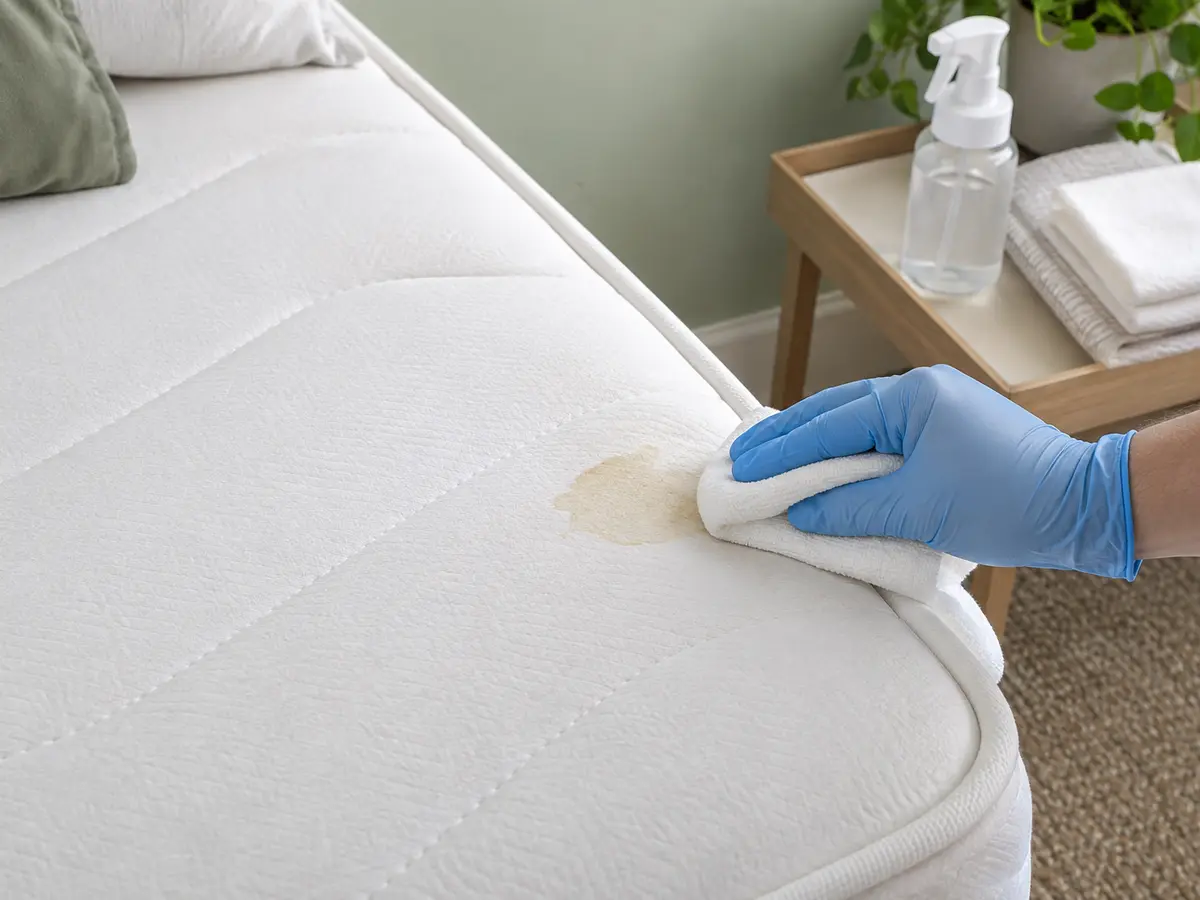
How to Remove Urine Stains from a Mattress
Urine stains can leave yellow marks and unpleasant smells, particularly if they are not treated quickly.
To deal with a fresh urine stain:
- Remove the bedding immediately.
- Use a clean, dry towel to blot up as much liquid as possible.
- Avoid rubbing, as this can push the liquid further into the mattress.
- Use a suitable upholstery or mattress cleaning product according to its instructions.
- Blot gently with a clean cloth.
- Allow the area to dry thoroughly.
For older urine stains, a specialist enzyme-based product may be suitable, but check that it is approved for your mattress material. Follow the manufacturer's instructions and test the product in an inconspicuous area first.
Avoid soaking the mattress in an attempt to remove the smell. Deep moisture can be difficult to extract and dry.
How to Remove Blood Stains from a Mattress
Blood stains should be treated carefully. Heat can make protein-based stains more difficult to remove, so start with cool water rather than hot water.
Follow these steps:
- Blot fresh blood with a clean cloth.
- Lightly dampen another cloth with cool water.
- Gently dab the stain without saturating the mattress.
- Use a suitable fabric-safe stain remover if necessary.
- Blot away any remaining residue with a clean cloth.
- Allow the area to dry completely.
For dried blood stains, several careful treatments may be required. Always check the product label and mattress care instructions before applying a stain remover.
How to Get Sweat Stains Out of a Mattress
Sweat and body oils can gradually leave discoloured patches on a mattress. These marks often appear around the areas where people sleep most frequently.
To tackle sweat stains:
- Remove the bedding and inspect the affected area.
- Vacuum the mattress to remove loose debris.
- Use a mattress-safe cleaning solution on a cloth.
- Gently blot the discoloured area.
- Remove any cleaning residue according to the product instructions.
- Let the mattress dry fully.
Using a washable mattress protector can help reduce the amount of sweat and body oils reaching the mattress surface.
How to Remove Yellow Stains from a Mattress
Yellow stains can develop due to sweat, body oils, spills and natural ageing. Before treating them, consider what may have caused the discolouration.
For suitable mattress fabrics, use a cleaning product specifically designed for upholstery or mattress care. Apply it carefully, following the label instructions.
Do not assume that a stronger chemical will produce a better result. Bleach and harsh stain removers can damage mattress fabrics and may cause further discolouration.
Some older yellow stains may be permanent, especially if they have penetrated the mattress filling.
How to Remove Old Stains from a Mattress
Old stains are usually more difficult to remove because they have had time to settle into the fabric.
Start by identifying the likely cause of the stain. Then:
- Vacuum the affected area if the mattress instructions allow it.
- Choose a suitable cleaner for the stain and fabric.
- Test the product on a hidden section.
- Apply it carefully without soaking the mattress.
- Blot gently and repeat only if the product instructions allow.
- Allow the area to dry completely.
If the stain remains after careful treatment, professional mattress cleaning may be worth considering.
How to Clean a Mattress with Baking Soda
Baking soda is commonly used to freshen mattresses because it can help absorb some surface moisture and reduce certain unwanted smells.
If your mattress manufacturer permits its use, follow these steps:
- Remove all bedding.
- Vacuum the mattress surface.
- Sprinkle a light layer of baking soda over the mattress.
- Leave it for the time recommended by the mattress or product manufacturer.
- Vacuum the powder thoroughly using a suitable attachment.
Baking soda is not a complete mattress cleaning solution. It will not reliably remove deep stains, disinfect the mattress or extract dirt from its inner layers.
Do not use it if the manufacturer advises against powders or dry cleaning products.
How to Clean a Memory Foam Mattress
Memory foam mattresses need extra care because their structure can absorb and retain moisture.
When cleaning a memory foam mattress:
- Check the manufacturer's cleaning instructions first.
- Remove and wash any removable cover according to its care label.
- Vacuum only if the manufacturer permits it.
- Spot clean using a small amount of an approved product.
- Blot gently rather than scrubbing.
- Avoid soaking or steam cleaning unless specifically approved.
- Allow the mattress to dry completely before use.
Excess water can penetrate memory foam and make it difficult to dry properly. Avoid using a hairdryer on high heat or placing the mattress near direct heat sources.
How to Deodorise a Mattress
Unpleasant mattress smells can come from sweat, spills, pets, body oils and trapped moisture.
To deodorise a mattress safely:
- Remove all bedding and wash it.
- Check for visible stains or damp areas.
- Vacuum the mattress if its care instructions allow.
- Use a suitable mattress-safe deodorising product when necessary.
- If permitted, use baking soda to help freshen the surface.
- Improve ventilation and allow the mattress to dry completely.
If the smell continues, there may be a source of contamination deeper inside the mattress. Repeatedly applying fragrance or deodoriser will not necessarily solve the underlying problem.
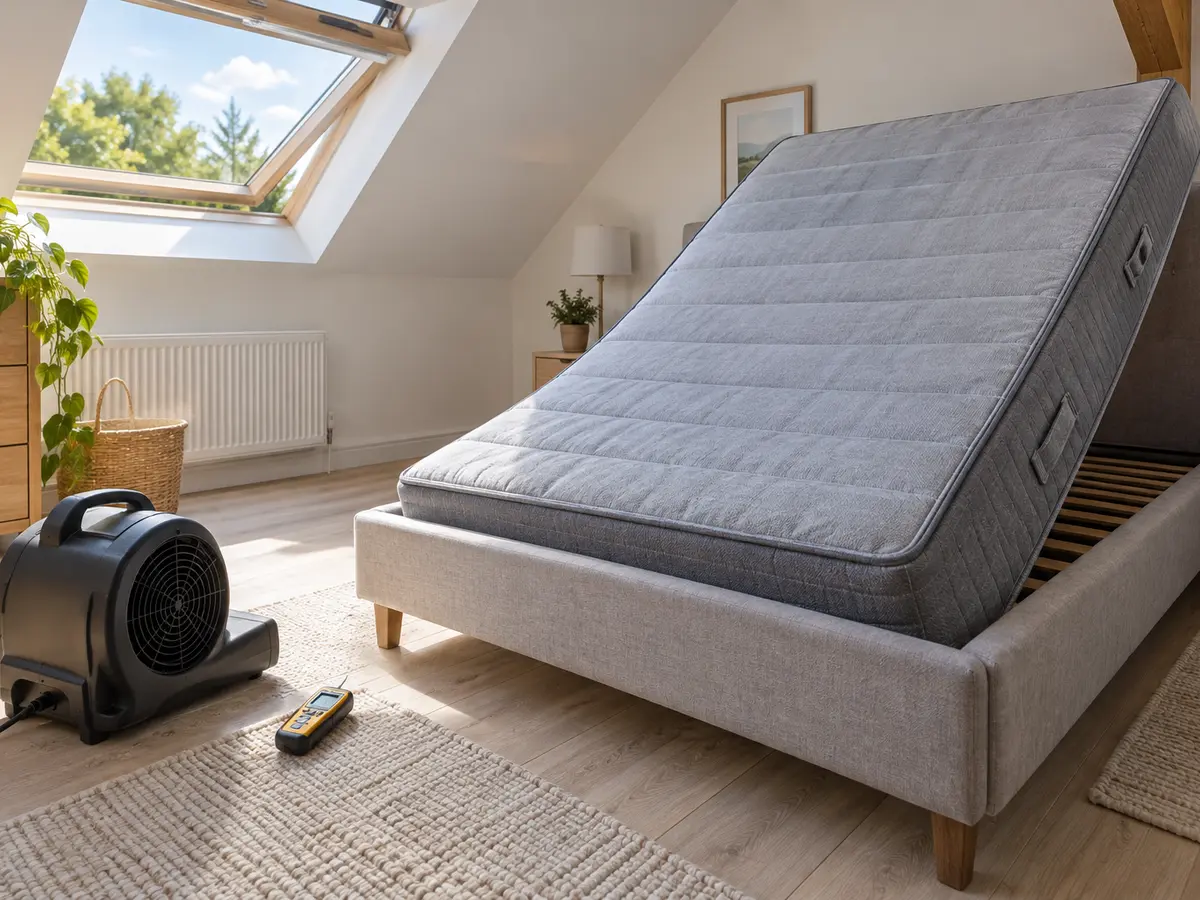
How to Dry a Mattress After Cleaning
Drying is one of the most important parts of mattress cleaning. A mattress that remains damp can develop unpleasant smells and may become vulnerable to mould or mildew.
Use these tips to help dry your mattress:
- Remove excess moisture by blotting with clean, dry towels.
- Open windows to improve natural ventilation when possible.
- Use a fan to encourage gentle airflow around the mattress.
- Keep the mattress uncovered until it is completely dry.
- Avoid direct high heat, which may damage some mattress materials.
- Check seams and edges, as these areas may take longer to dry.
Drying time varies depending on the mattress material, the amount of moisture used and the room's ventilation. Do not rely on a fixed number of hours; check that the mattress is fully dry before replacing the bedding.
How Often Should You Clean Your Mattress?
How often you should clean your mattress depends on how frequently it is used, whether you have pets, and whether anyone in the household experiences spills or allergies.
As a general maintenance routine:
- Weekly: Wash your bedding and keep the bedroom ventilated.
- Monthly: Inspect the mattress and vacuum it if the manufacturer permits.
- As needed: Spot clean spills and stains as soon as it is safe to do so.
- Periodically: Give the mattress a more thorough surface clean using an approved method.
A mattress protector can also help reduce the amount of dirt, sweat and liquid reaching the mattress.
Mattress Cleaning Tips to Keep Your Mattress Fresh
A few simple habits can make mattress maintenance easier:
- Use a washable mattress protector.
- Change and wash bedding regularly.
- Deal with spills as soon as possible.
- Avoid eating and drinking in bed where practical.
- Keep your bedroom well ventilated.
- Follow the manufacturer's cleaning instructions.
- Never put damp bedding back onto a mattress.
- Avoid excessive moisture and harsh cleaning chemicals.
Regular care can help keep the mattress surface fresher and reduce the build-up of everyday dirt.
When Should You Consider Professional Mattress Cleaning?
Home cleaning methods can help with light surface dirt and some fresh stains. However, they may not be enough for heavily soiled mattresses, persistent odours or stains that have penetrated deeper into the material.
Professional mattress cleaning may be useful when:
- The mattress has several stubborn stains.
- Pet accidents have left persistent odours.
- You are unsure which cleaning product is safe for the material.
- Previous cleaning attempts have not worked.
- You want help with a more thorough mattress clean.
At Fresh Loom Carpet & Upholstery Cleaning, we understand that keeping your home clean involves looking after all your soft furnishings. Alongside mattress care, our upholstery cleaning service helps refresh fabric-covered furniture and remove everyday dirt and marks.
Frequently Asked Questions About Mattress Cleaning
What is the best way to clean a mattress at home?
Start by removing the bedding and vacuuming the mattress if its care instructions allow. Spot clean stains with a suitable product, use baking soda only if permitted, and allow the mattress to dry completely.
Can I use baking soda to clean my mattress?
Baking soda can help freshen some mattress surfaces and absorb certain unwanted smells. However, it does not replace proper stain treatment or deep cleaning. Check the manufacturer's instructions before using it.
How do I remove urine stains from a mattress?
Blot up as much liquid as possible, then use a mattress-safe cleaning product according to its instructions. Avoid soaking the mattress and make sure it dries completely.
How do I remove yellow stains from a mattress?
Yellow stains may be caused by sweat, body oils or spills. Use a suitable upholstery or mattress cleaner after testing it on a hidden area. Some older stains may not be fully removable.
Can I steam clean a mattress?
Not every mattress is suitable for steam cleaning. Heat and moisture can damage some materials, so only use steam if the mattress manufacturer specifically permits it.
How do I remove bad smells from a mattress?
Wash the bedding, identify and treat the source of the smell, and allow the mattress to ventilate and dry. A suitable deodorising product may help, but persistent odours may require professional attention.
How often should a mattress be deep cleaned?
There is no single schedule that suits every mattress. Regular surface maintenance and prompt stain treatment are important. Follow the manufacturer's care recommendations for more intensive cleaning.
How long does a mattress take to dry after cleaning?
Drying time depends on the material, moisture level, temperature and ventilation. Allow the mattress to dry completely before putting sheets or a mattress protector back on.
Final Thoughts
Knowing how to clean a mattress can help you manage everyday dirt, spills and unpleasant odours. Regular care can make a difference, but some stains and smells are difficult to remove with household cleaning methods alone.
If your mattress needs more than routine maintenance, Fresh Loom Carpet & Upholstery Cleaning can help. Find out more about our mattress cleaning service.